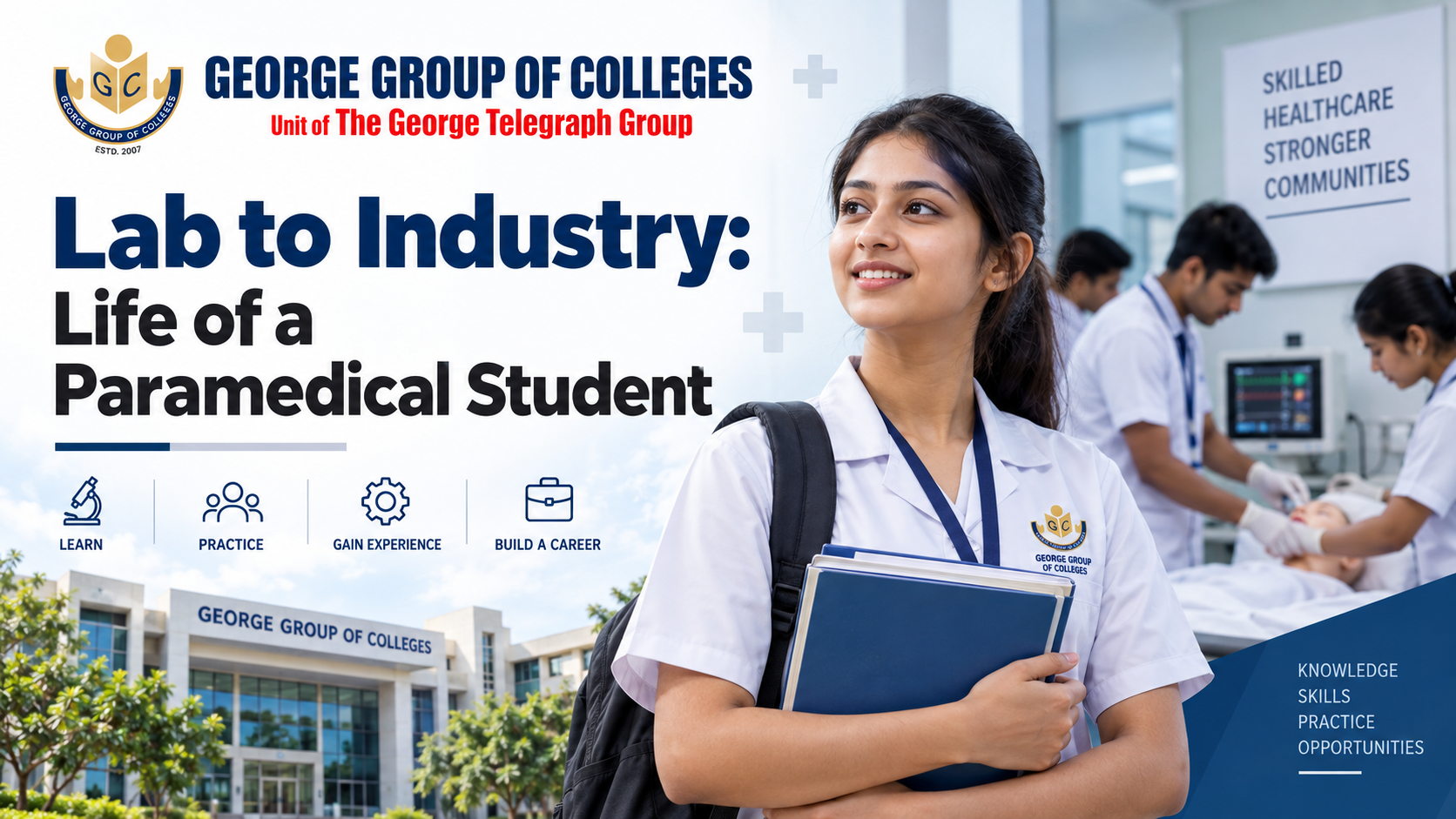
A career in healthcare is built not only through textbooks but also through practical experience, precision and the ability to work confidently in real-world situations. For a paramedical student, every day is an opportunity to transform theoretical knowledge into practical skills. At George Group of Colleges, students experience a learning environment that combines academic understanding, laboratory practice and industry-oriented training, helping them prepare for the demands of modern healthcare industry.
Starting the Day with Theoretical Learning
A typical day begins with classroom sessions where students strengthen their understanding of subjects related to healthcare and allied health sciences. Lessons may cover anatomy, physiology, pathology, microbiology, medical terminology, diagnostic procedures and other specialized areas depending on the student’s chosen programme.
These sessions provide the foundation for practical learning. Understanding how the human body functions, how diseases are identified and how diagnostic procedures work enables students to approach laboratory and clinical activities with greater confidence.
At George Group of Colleges, academic learning is designed to help students understand not just what a procedure involves, but also why it is performed and how it contributes to patient care.
Moving from Classroom to Laboratory
The most exciting part of a paramedical student’s day often begins when theoretical concepts move into the laboratory. Practical sessions give students an opportunity to apply what they have learnt, under guided supervision.
Students also learn how to handle laboratory equipment, follow standard operating procedures, collect and process samples, conduct basic diagnostic tests and record observations accurately. They are taught the importance of maintaining hygiene, following safety protocols and preventing contamination.
For aspiring healthcare professionals, these experiences are essential. A small error in a laboratory procedure can affect diagnostic results, which is why accuracy and attention to detail are important paramedical skills.
Learning the Importance of Precision and Responsibility
Paramedical professionals play an important role in supporting doctors and other healthcare specialists. Their work often contributes to diagnosis, treatment planning and patient monitoring. Therefore, students need to develop a strong sense of responsibility, right from the beginning of their education.
Laboratory training teaches students to be careful with samples, instruments, documentation and test results. They learn that healthcare is not simply about completing a task, it is also about performing every task responsibly and following established procedures.
This emphasis on precision helps students develop the professional mindset required for successful paramedical careers.
Developing Hands-On Healthcare Skills
Practical training extends beyond technical knowledge. Students also develop communication, teamwork, time management and problem-solving skills.
A healthcare environment is fast-paced. Professionals may need to manage multiple responsibilities while maintaining accuracy and composure. Through practical activities and collaborative learning, students gradually understand how to work efficiently while maintaining professional standards.
At George Group of Colleges, this combination of academic knowledge and hands-on learning helps students become more confident about applying their skills in professional environments.
Understanding Real-World Clinical Environments
As students progress in their education, exposure to clinical environments can help them understand how healthcare institutions function. The transition from laboratory learning to real-world settings introduces students to professional expectations, workplace discipline and patient-centric care.
Students begin to understand how different healthcare departments work together. They also realize the importance of communication between laboratory professionals, doctors, nurses and other members of the healthcare team.
Such exposure can make the transition from education to employment smoother because students become familiar with the professional environment they are preparing to enter.
Focus on Patient Care
Although many paramedical roles involve technical and diagnostic responsibilities, patient care remains an important part of healthcare education. Students learn the value of empathy, respectful communication, confidentiality and responsible behaviour.
A patient may feel anxious while undergoing a diagnostic procedure or medical examination. A professional approach can help create a more comfortable experience. Learning how to interact respectfully with patients is therefore an important part of becoming an effective healthcare professional.
Preparing for Industry Requirements
The healthcare industry continues to evolve with advances in diagnostic technology, medical equipment and treatment practices. This makes continuous learning essential for aspiring paramedical professionals.
Industry-oriented paramedical education helps students understand the expectations of employers while developing relevant technical and professional abilities. Exposure to practical procedures, laboratory equipment and workplace practices can help bridge the gap between academic learning and industry requirements.
For students looking for paramedical courses in Kolkata, choosing an institution that combines theoretical education with practical exposure can be an important step towards building a strong career foundation.
Join George Group to Become a Paramedical Professional
A day in the life of a paramedical student is therefore much more than a routine of attending classes. It is a continuous process of learning, practising, making observations, developing discipline and understanding the responsibilities associated with healthcare.
At George Group of Colleges, students are encouraged to build the knowledge, practical abilities and professional confidence required to move from lab to industry. With the right education and hands-on experience, aspiring healthcare professionals can prepare themselves for diverse opportunities in the growing allied healthcare sector.