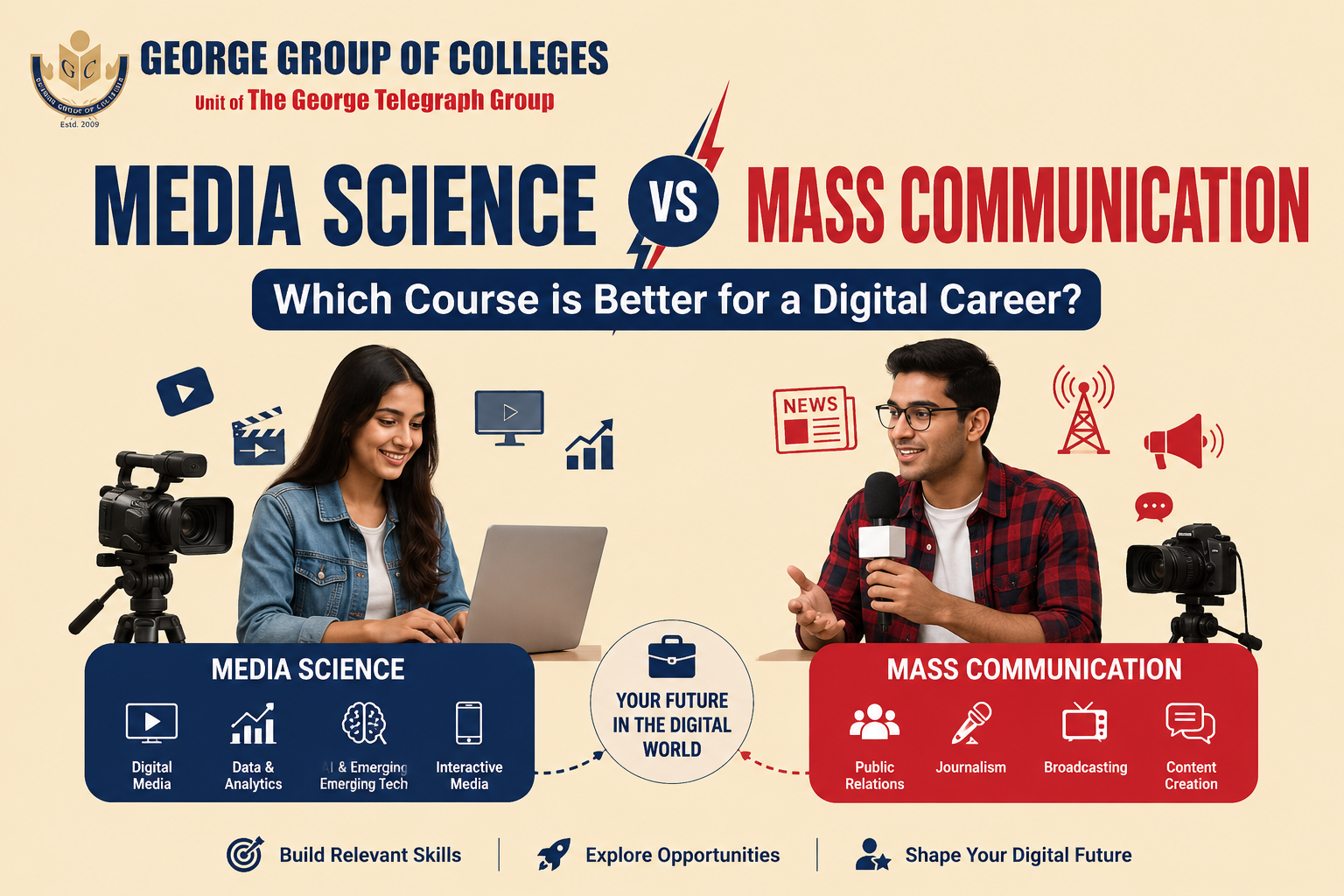
Every year, thousands of students sit across from confused parents trying to explain the difference between Media Science and Mass Communication. Honestly, even some college counsellors struggle with this one. Both courses sound similar, both involve media and both promise “exciting careers.” but they are built differently and that difference matters a lot if you’re aiming for a digital career.
With digital jobs in marketing, content and media growing faster than traditional broadcast and print roles, picking the right course early can save you years of unnecessary backtracking.
What is Media Science?
Media Science is a more technical, production-focused course. Think cameras, editing software, sound design, animation and digital content creation. It blends media theory with hands-on technical training.
Core subjects typically include video production, graphic design, digital media tools, photography, animation basics and media technology.
Practical learning is the backbone here. Students spend a good chunk of their time in labs and studios, working on real projects—shooting videos, editing reels, designing graphics, and experimenting with digital tools used in actual media houses and agencies.
What is Mass Communication?
Mass Communication is broader and more theory-driven, though most colleges have modernized it with digital modules.
Course overview: It covers journalism, public relations, advertising, media ethics and communication theory. Traditionally, it prepared students for newspapers, TVand radio.
Traditional and modern focus: Today’s curriculum mixes old-school journalism training with digital journalism, social media strategy, and basic content marketing.
Curriculum usually includes media writing, PR, advertising principles, communication research, and increasingly, digital media modules.
Media Science vs Mass Communication (Comparison Table)
| Aspect | Media Science | Mass Communication |
| Course Focus | Technical & production-based | Theory & communication-based |
| Subjects | Video, design, animation, editing | Journalism, PR, advertising, media theory |
| Technical Skills | High (software, editing tools) | Moderate (writing, research tools) |
| Creativity | Visual and production creativity | Conceptual and written creativity |
| Career Opportunities | Content creator, video editor, designer | Journalist, PR executive, copywriter |
| Digital Marketing Relevance | High – directly usable skills | Moderate – needs upskilling |
| Salary Prospects | Competitive, skill-dependent | Decent, experience-dependent |
| Best Suited For | Hands-on, creative-technical learners | Strong communicators, writers, strategists |
Which Course Offers Better Digital Career Opportunities?
This is where things get interesting, because the answer depends on what you actually want to do.
For digital marketing and performance marketing, both courses can work, but Media Science students often adapt faster to tools like Meta Ads Manager, Canva and video editing software since they already understand visual content. Still, mass communication for digital careers works well too, especially for roles needing strong copy and campaign messaging.
Social media marketing rewards Media Science grads for content creation and Mass Comm grads for caption writing, trend analysis and audience psychology.
Content strategy roles favour Mass Communication backgrounds because of the research and writing foundation.
Video production and UI content roles lean heavily toward Media Science career opportunities, given the technical training in editing and design software.
Brand communication and influencer marketing suit both, depending on whether the role needs visual storytelling or written brand voice.
SEO roles increasingly value media science skills for online careers, since understanding visuals, video and on-page content design helps with modern search optimization.
AI-assisted media roles, think AI content editors, prompt-based design assistants, automated video tools, are opening up for both streams. Still, those comfortable with software tend to pick these up quicker.
Skills You Will Need for Future Digital Careers
Regardless of which course you choose, certain skills will decide your career trajectory:
- AI literacy: Knowing how to use AI tools for content, design, and research
- Analytics: Reading data from Google Analytics, Meta Ads, or YouTube Studio
- Content creation: Writing, designing, or filming consistently
- Communication: Clear, persuasive messaging across formats
- Video editing: Even basic skills give you an edge
- Storytelling: The ability to make information engaging
- Marketing tools: Familiarity with platforms like Canva, CapCut, or ad managers
- Creativity: Original thinking in a crowded content space
- Adaptability: Digital trends shift fast—so should you
Final Verdict
If you enjoy working with cameras, design software, and hands-on production, Media Science gives you a head start for digital careers. If you’re a strong writer, curious about journalism, PR, or brand strategy, Mass Communication still holds its ground—especially when paired with digital upskilling.
In the Media Science vs Mass Communication debate, there’s no universal winner. Choose based on whether you want to create content or strategize and communicate it.
FAQs
Is Media Science better than Mass Communication?
Neither is universally “better.” Media Science suits students interested in technical, production-based skills, while Mass Communication suits those drawn to writing, journalism, and strategy. Your career goals should decide which fits you.
Which course is best for digital marketing?
Both work well. Media Science supports content creation and visual assets, while Mass Communication strengthens copywriting and campaign strategy—two essential pillars of digital marketing.
What jobs can I get after studying Media Science?
Common roles include video editor, content creator, graphic designer, social media manager, animatorand digital media specialist, many of which are in high demand across agencies and brands.
Is Mass Communication still relevant in the AI era?
Yes. AI handles tasks, but human communication, storytelling, and strategic thinking remain essential. Mass Communication graduates who add digital and AI tool skills stay highly employable.